Unlocking Creative Depth with Ghost Numbers 3D SVG Assets
In the evolving landscape of digital crafting and custom merchandise design, the demand for assets that offer depth without complexity is rising. Designers, small business owners, and hobbyists are constantly seeking files that bridge the gap between professional aesthetics and user-friendly execution. The Ghost Numbers 3D SVG collection represents a specific category of digital resources designed to meet this need. By providing a set of numerals from 0 to 9 constructed with layered depth, these files allow creators to produce dimensional designs using standard cutting machines and design software. This analysis explores the practical utility, technical structure, and real-world application of these assets for those looking to elevate their project output.
Understanding the Layered Architecture
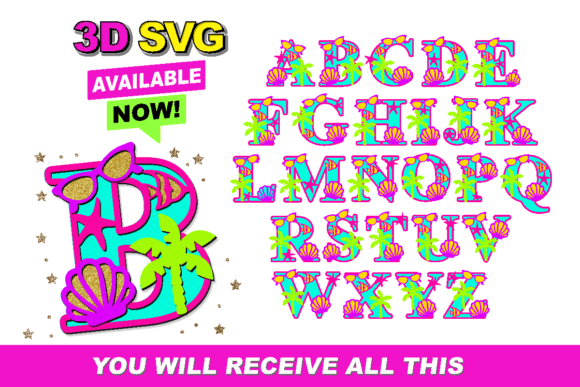
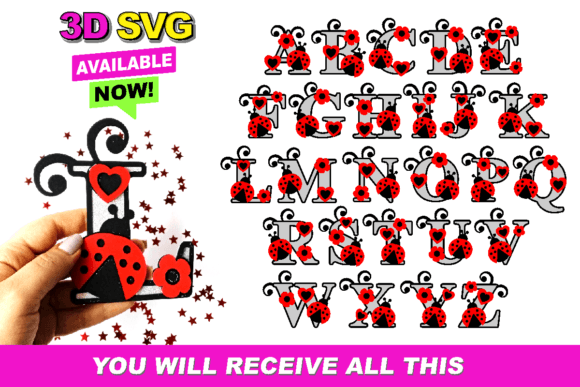
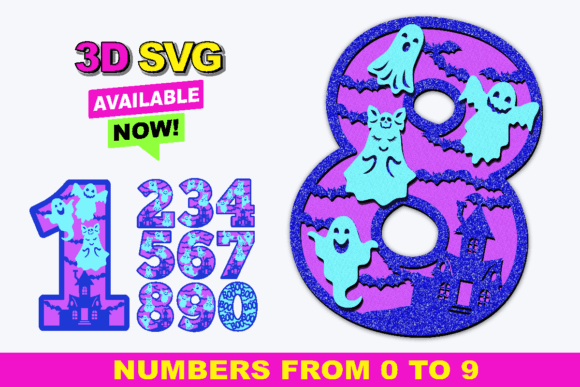
At its core, the value of any 3D-style SVG file lies in its construction. Unlike a flat vector image, which consists of a single path or shape, a 3D effect is achieved through stacking. The Ghost Numbers 3D SVG pack includes three distinct layers for each numeral. This tri-layer approach is significant because it provides enough depth to create a visible shadow or extrusion effect without becoming so complex that it overwhelms standard cutting mats or requires excessive weeding time.
When you download this collection, you receive a zipped folder containing files optimized for popular platforms like Silhouette Studio and Cricut Design Space. The "ghost" aesthetic typically refers to a style where the layers are slightly offset or utilize transparency effects to create a floating appearance, though in the context of physical cutting, it often translates to a clean, stacked look. The inclusion of numbers 0 through 9 ensures comprehensive coverage for dates, ages, scores, and addresses, making the set versatile for various numerical requirements.
Compatibility and Software Integration
One of the primary concerns for creators investing in digital assets is compatibility. These files are formatted specifically to function within vector-based cutting software. For users of Silhouette Studio or Cricut Design Space, the import process is generally seamless. The layered structure allows the software to recognize each tier as a separate cut line or draw path. This separation is crucial for users who wish to use different materials for each layer—for instance, using a dark cardstock for the base layer and a lighter shade for the top to enhance the 3D illusion.
However, it is important to note that if you are utilizing a different type of machine or proprietary software, you must verify that your system supports multi-layer SVG imports. While SVG is a universal standard, not all interfaces handle layered files with the same intuitive drag-and-drop functionality. Professionals should always test a single file from the zip archive before committing to a large production run to ensure their specific workflow can accommodate the layer grouping.
Practical Applications Across Industries
The versatility of the Ghost Numbers 3D SVG collection extends far beyond simple decoration. Its utility is best understood by examining how different sectors can leverage these assets to improve their product offerings.
- Cake Toppers and Event Decor: This is perhaps the most immediate application. Bakers and event planners frequently require custom ages for birthday cakes or anniversary years for celebration toppers. The 3D nature of these numbers adds a premium feel compared to flat acrylic or paper cuts. The layered design provides structural stability, allowing the numbers to stand upright more effectively when attached to skewers.
- Apparel and Textile Printing: For entrepreneurs running print-on-demand businesses or creating custom team jerseys, these vectors can be used to generate heat transfer vinyl (HTV) designs. The layered approach allows for a "shadow" effect using a contrasting color of vinyl, giving t-shirts and hoodies a professional, screen-printed look without the high setup costs.
- Stickers and Branding: Small business owners selling stickers can use these files to create dimensional labels for packaging. When printed on vinyl and die-cut, the offset layers create a visual pop that draws the consumer's eye, enhancing brand perception.
- Educational Materials: Educators and parents can utilize these large, clear numerals for classroom decorations, math manipulatives, or learning aids. The bold, 3D style makes the numbers easily visible from a distance, aiding in engagement.
Evaluating Quality and Usability
From a production standpoint, the quality of an SVG pack is determined by the cleanliness of its paths and the logical organization of its layers. A well-constructed file saves time during the "weeding" process—the removal of excess material from a cut design. If the layers in the Ghost Numbers 3D SVG are too close together, it can lead to tearing in delicate materials like thin vinyl. Conversely, if they are too far apart, the 3D effect is lost. This collection appears to strike a balance suitable for medium-weight cardstock and standard HTV, which covers the majority of consumer crafting needs.
Furthermore, the consistency across the set (0-9) is vital. Inconsistent stroke widths or varying layer offsets between numbers can ruin the aesthetic of a multi-digit design, such as a year "2024." Uniformity ensures that when a user combines multiple numbers, the final composition looks cohesive and professionally designed rather than pieced together from disparate sources.
Strategic Value for Content Creators and Businesses
For freelancers and marketers, time is a currency. Sourcing individual number designs or creating 3D effects manually in vector software can consume hours of billable time. Having a pre-made, reliable library like the Ghost Numbers 3D SVG allows professionals to focus on customization and client communication rather than foundational design work. The ability to quickly assemble a custom date or score for a client project increases throughput and profitability.
Moreover, the long-term value of such a resource lies in its reusability. Unlike a physical template that wears out, a digital SVG file can be resized infinitely without loss of quality. Whether a creator needs a tiny number for a jewelry tag or a massive numeral for a wall decal, the vector format ensures crisp edges at any scale. This scalability makes the investment in a high-quality zip folder worthwhile for serious hobbyists and business owners alike.
Limitations and Considerations
While highly useful, these files are not a one-size-fits-all solution for every manufacturing method. Users attempting to use these layers for intricate metal etching or very fine laser engraving may find the offset distances need adjustment. Additionally, the "3D" effect is simulated through layering; it does not replace true 3D modeling software for applications requiring rotational views or complex lighting simulations. It is strictly a 2.5D solution intended for flat media that is stacked or printed with shadow effects.
Users must also possess the basic technical knowledge to ungroup and manipulate layers within their chosen software. While the files are "easy to use," they still require a fundamental understanding of how cutting machines interpret vector data. Beginners may need to consult tutorials on handling multi-layer SVGs to achieve the best results.
Final Assessment on Workflow Integration
The Ghost Numbers 3D SVG collection serves as a pragmatic tool for anyone involved in digital fabrication. Its strength lies not in novelty, but in its execution of a common requirement—creating dimensional numbers—with efficiency and consistency. By offering a complete set of numerals in a ready-to-cut format, it removes a significant bottleneck from the creative process.
For the entrepreneur looking to expand their product line with custom numbered items, or the educator needing durable visual aids, this asset provides a solid foundation. The key to maximizing its value is understanding the material limitations of your specific machine and experimenting with color combinations to fully exploit the layered design. When integrated thoughtfully into a workflow, these files can significantly enhance the perceived quality of finished goods, proving that sometimes the most effective tools are the ones that simplify the complex task of adding depth to flat designs.