Evaluating the 3d SVG Shadow Box Frame Template for Layered Art Projects
For artists and crafters working with dimensional media, the transition from a flat canvas to a deep, immersive display often requires specific structural solutions. The 3d SVG Shadow Box Frame Template represents a digital blueprint designed to bridge this gap, offering a customizable approach to housing multi-layered artwork. Unlike pre-manufactured frames that come with fixed dimensions and limited depth options, this template provides a scalable file format compatible with laser cutters and CNC machines, allowing creators to construct a bespoke enclosure tailored to their specific project needs.
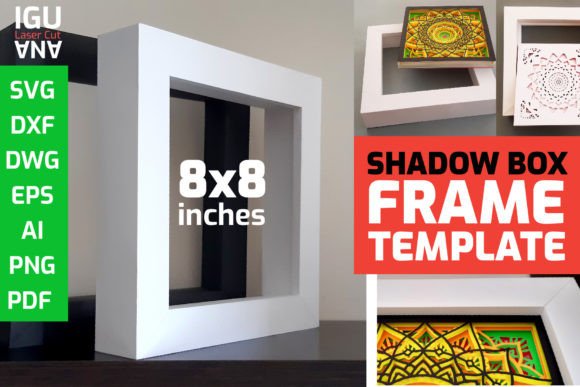
The core distinction of this template lies in its engineering for depth and stability. Designed to accommodate an 8x8 inch artwork, the frame creates an internal cavity approximately 1.57 inches (4 centimeters) deep. This specific volume is critical for projects such as paper quilling, layered mandalas, or mixed-media assemblages where elements protrude significantly from the backing. Furthermore, the design incorporates a functional protruding ledge intended to secure the artwork firmly in place, preventing it from shifting or falling out—a common frustration with generic deep-box frames that rely solely on friction or external clips.
Structural Design and Functional Tradeoffs
When evaluating the 3d SVG Shadow Box Frame Template against standard framing options, one must consider the assembly process and the resulting aesthetic. The template utilizes a construction method where four sides are joined, typically creating diagonal seams at the corners. The file includes optional top and bottom cover pieces specifically designed to conceal these joints, offering a seamless, finished look similar to high-end retail frames. However, this introduces a decision point for the maker: utilize the covers for a polished appearance or leave the seams exposed to mimic the rustic character of a handcrafted wooden frame.
Leaving the seams visible can add a layer of authenticity to the piece, suggesting a workshop origin rather than mass production. Conversely, applying the covers provides a cleaner silhouette that may better suit contemporary interior designs. This flexibility is a significant advantage over rigid, store-bought alternatives where the finish is predetermined. Additionally, the overall external dimensions of approximately 10.2 x 10.2 x 1.96 inches provide a substantial presence without being overwhelming, making it suitable for shelf displays or wall mounting in smaller spaces.
A practical consideration for any shadow box is environmental protection. The design of this template allows for the insertion of a clear film between the frame structure and the artwork. This feature is particularly valuable for preserving delicate materials like dried flowers, fabric compositions, or paper cuts from dust and humidity. While traditional glass-fronted frames offer similar protection, they add significant weight and risk breakage during shipping or handling. The option to use lightweight acrylic or specialized clear films in this DIY context reduces the overall mass of the final product while maintaining visibility.
Comparison with Pre-Made and Alternative Framing Methods
In the landscape of framing solutions, the 3d SVG Shadow Box Frame Template occupies a middle ground between off-the-shelf products and completely custom carpentry. Pre-made shadow boxes found in craft stores often suffer from shallow depths, rarely exceeding one inch, which can crush intricate 3D designs. They also frequently lack adequate mounting mechanisms for heavy or uneven items. On the other end of the spectrum, commissioning a custom wooden frame from a professional framer ensures perfect fit and finish but comes with a prohibitive cost and longer lead times.
This digital template offers a cost-effective alternative for those with access to cutting technology. By sourcing materials like MDF, plywood, or even thick cardboard, the creator controls the material quality and finish. For instance, using birch plywood allows for a natural wood grain aesthetic that complements organic subjects like floral arrangements, whereas painted MDF can match specific color schemes. The ability to choose the material is a distinct advantage over plastic or composite pre-made frames, which may off-gas or degrade over time.
However, the tradeoff is the requirement for assembly. Unlike a ready-to-use frame, this option demands time, adhesive, and potentially finishing tools like sandpaper or paint. Users must be comfortable with basic construction techniques to ensure the corners are square and the glue bonds are strong. For individuals seeking immediate results without any labor investment, a pre-assembled option remains the superior choice. Yet, for hobbyists, small business owners creating product packaging, or educators teaching design principles, the engagement of building the frame adds value to the final piece.
Ideal Use Cases and Limitations
The 3d SVG Shadow Box Frame Template is particularly well-suited for specific types of artistic expression. Its 4-centimeter depth makes it an ideal candidate for light boxes. The spacious interior allows for the installation of LED strips or puck lights without overheating or crowding the artwork. This capability transforms static images into glowing displays, enhancing the visual impact of translucent materials like vellum or colored acetate used in layered mandalas.
Photographers and scrapbookers also benefit from the secure mounting ledge. When displaying monograms or photographs with added embellishments, the risk of the content sliding down the glass is eliminated by the integrated stop. This is a frequent failure point in cheaper deep frames where the backing board is simply pressed into place. Furthermore, the template's scalability means that if a user needs a different size, the vector geometry can often be adjusted proportionally, provided the material thickness parameters are recalculated.
Despite these strengths, there are limitations to consider. The fixed internal width of 8x8 inches means that artwork larger than this dimension cannot be accommodated without modifying the source file, which requires vector editing skills. Additionally, while the template supports the insertion of clear film, it does not inherently include a mechanism for sealing the back completely against moisture unless the user adds their own backing board and sealing tape. For archival purposes involving highly sensitive artifacts, additional conservation-grade measures would be necessary beyond what the template provides structurally.
Making the Right Choice for Your Project
Deciding whether to utilize the 3d SVG Shadow Box Frame Template ultimately depends on your priorities regarding customization, cost, and effort. If your goal is to present a unique, multi-layered design that requires specific depth and lighting integration, this template offers a level of adaptability that commercial products rarely match. The inclusion of a photo guide with sequential photographs in the file package further lowers the barrier to entry, assisting users who may be new to frame construction.
Conversely, if you are framing a standard print with no dimensional elements, or if you lack the tools to cut and assemble the frame components, a traditional flat frame or a pre-made box frame may be more efficient. The value proposition here is strongest for creators who view the frame not just as a container, but as an integral part of the artwork's presentation. By controlling the depth, the seam treatment, and the internal lighting, the artist ensures that the framing enhances rather than distracts from the central design.
In summary, this template serves as a versatile tool for transforming digital designs into tangible, protected displays. It balances the precision of machine-cut components with the creative freedom of DIY assembly. Whether used for showcasing complex paper art, protecting delicate flower compositions, or creating illuminated decor, it provides a robust framework—literally and figuratively—for bringing three-dimensional concepts to life. As with any project, success relies on matching the tool to the task; for deep, custom displays, this SVG solution stands out as a pragmatic and flexible option.